More confident molecular testing
The QCPRECISE™ platform is built for applications where tissue quality, tumor content, spatial context, and sample stewardship matter. From genomic profiling to transcriptomic analysis and future multiomic workflows, QCPRECISE enables researchers and molecular pathology teams to extract more meaningful data from the tissue regions that matter most.
Data below from projects with Mayo Clinic and Singapore General Hospital.
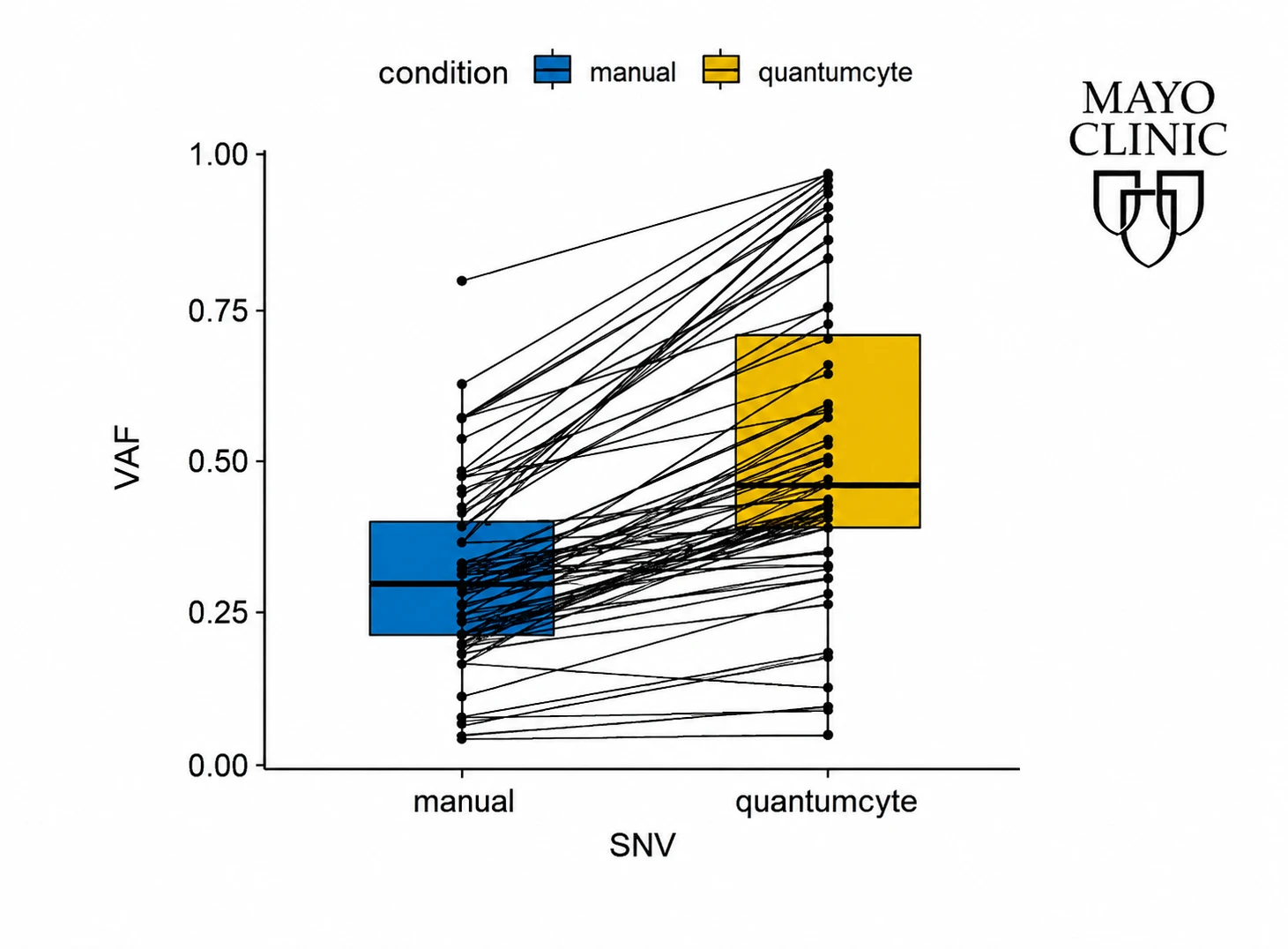
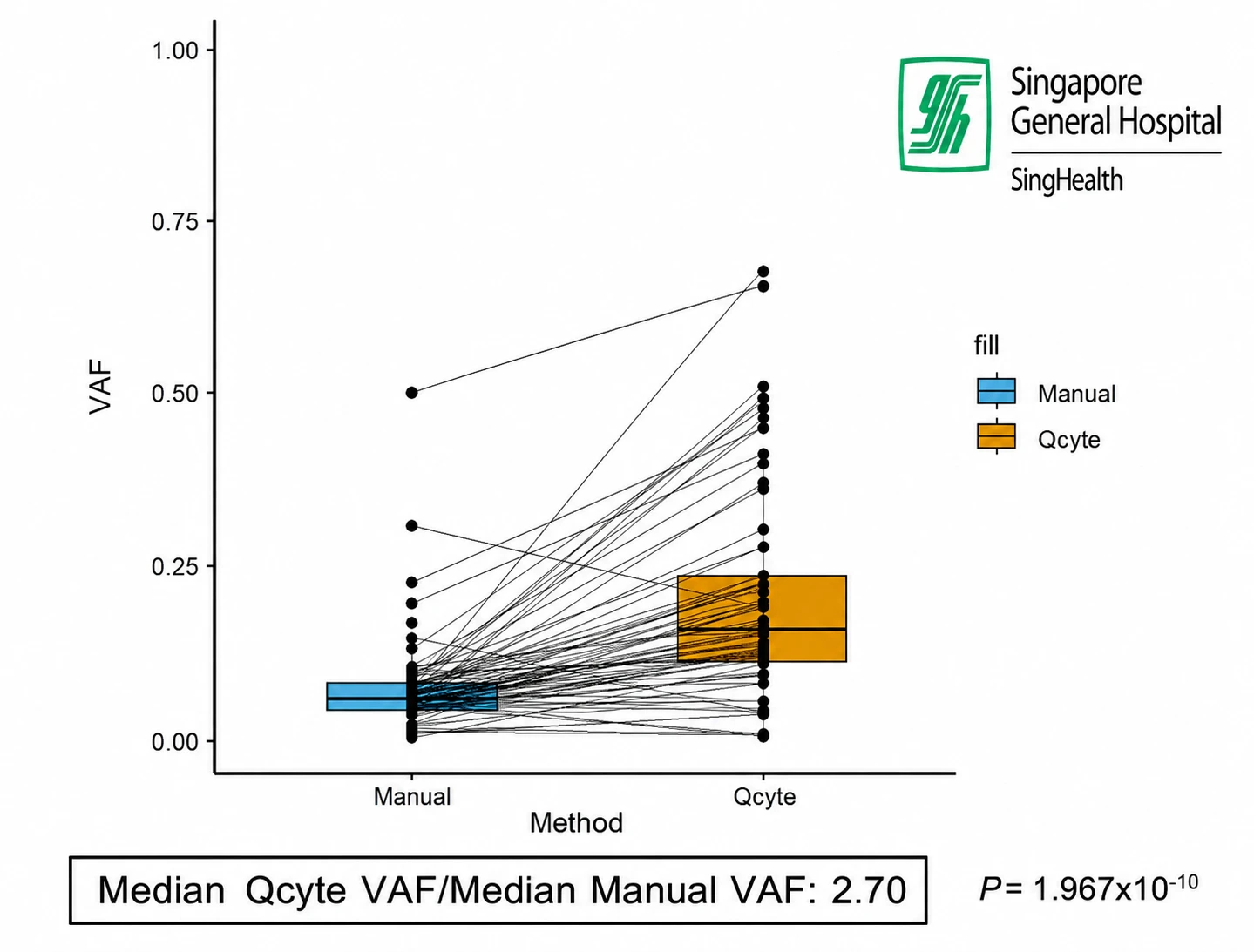
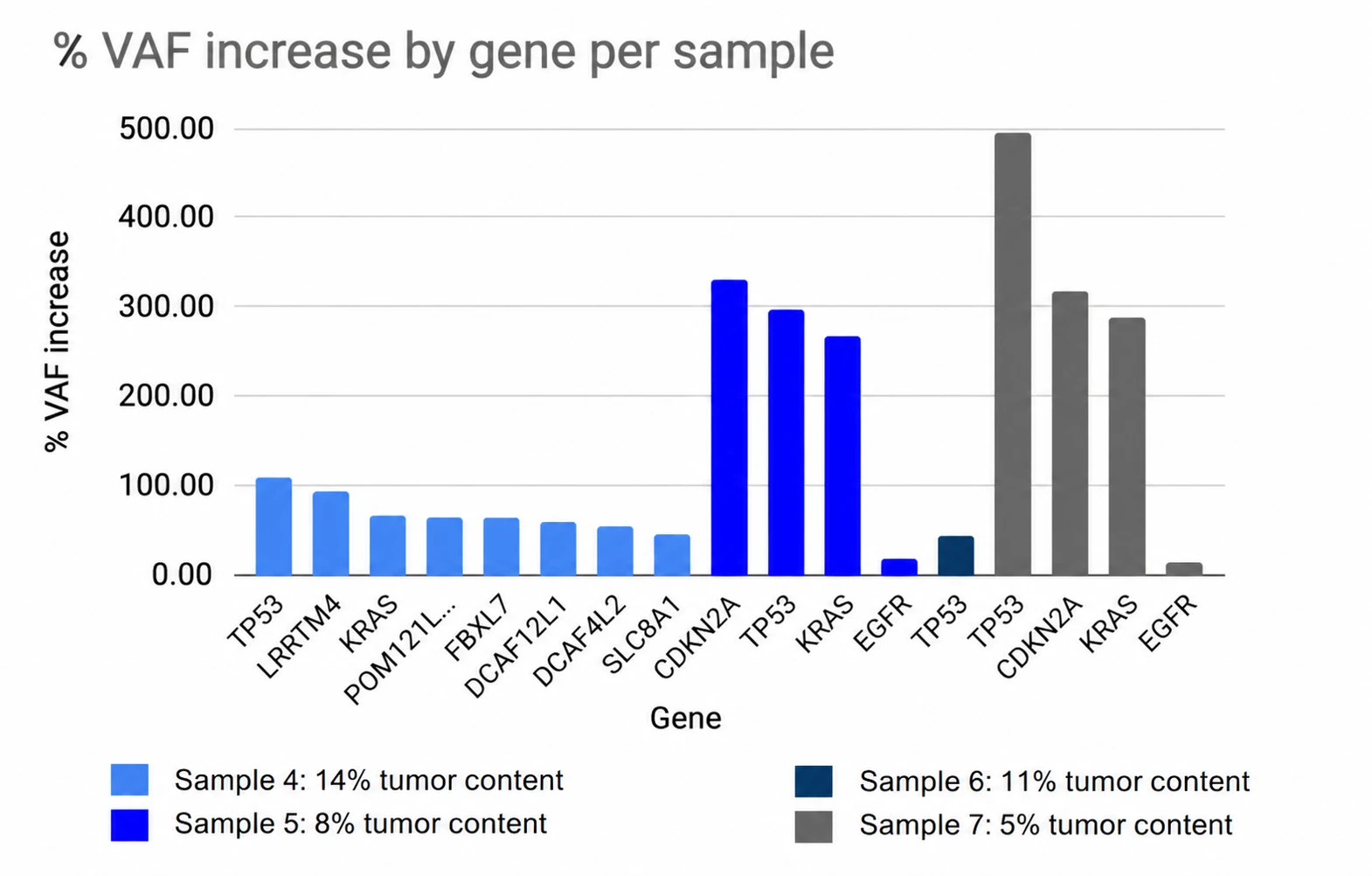
High-confidence DNA testing begins with better tissue enrichment.
Genomic assays depend on the quality and composition of the tissue that enters the workflow. Low tumor content, stromal admixture, necrosis, inflammation, and limited biopsy material can reduce assay sensitivity, increase uncertainty, or prevent samples from moving forward to testing.
QCPRECISE™ enables pathology-guided tissue enrichment prior to DNA extraction. Using manual or AI annotations, the platform isolates selected regions of interest and delivers enriched DNA inputs for downstream genomic applications, including NGS, qPCR, and other molecular assays.
By enriching the tissue region before extraction, QuantumCyte helps laboratories increase the molecular signal from clinically relevant cells while reducing dilution from surrounding non-target tissue.
Align RNA readouts with the tissue regions that matter most.
Transcriptomic analysis provides critical insight into gene expression, tumor biology, immune activity, pathway activation, and disease state. However, RNA-based workflows are highly dependent on the cellular composition of the input tissue. When target regions are diluted by surrounding tissue, the resulting expression profile may obscure the biology of interest.
QCPRECISE™ enables region-specific tissue enrichment prior to RNA extraction, helping researchers and laboratories generate transcriptomic data from defined pathology-guided regions. This allows teams to better align gene expression data with the underlying tissue architecture and biological context visible on the slide.
The result is a more targeted RNA input that can support applications such as RNA sequencing, expression profiling, biomarker discovery, translational research, and assay development.
Precision extraction resulted in differential clustering of tumor buds vs carcinoma, showing that gene expression between segments is different
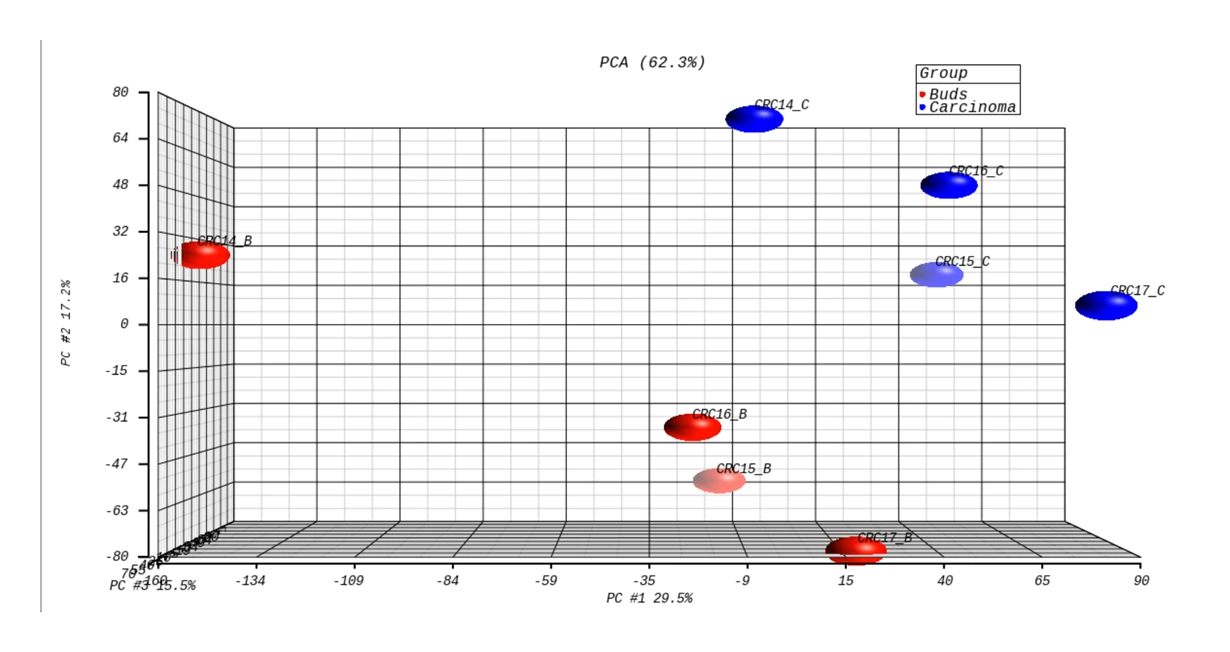
Data from project with Mayo Clinic.
One tissue region. Multiple molecular insights.
As molecular pathology moves toward multimodal analysis, the ability to connect tissue morphology with genomic, transcriptomic, and proteomic data becomes increasingly important. QCPRECISE™ provides a foundation for multiomic tissue analysis by enabling pathology-guided enrichment from selected regions of interest.
The platform is designed to support extraction workflows that can generate DNA, RNA, and protein lysates from spatially defined tissue regions. Today’s platform can be used for genomics and transcriptomics applications, with proteomics and broader multiomic applications becoming available in the future.
By helping teams analyze multiple molecular layers from pathology-matched regions, QCPRECISE™ creates a bridge between digital pathology and downstream molecular data. This supports a future where tissue selection, molecular profiling, and multimodal analytics work together to deliver deeper biological insight from limited samples.
Future Application Area: Proteomics
QuantumCyte is exploring future applications where precision tissue enrichment may support protein-based analysis. Please contact us for more information about our proteomics applications.
QCPRECISE™
Spatially precise tissue enrichment
Genomics
DNA sequencing, mutation detection
Transcriptomics
RNA sequencing, gene expression
Proteomics
Protein analysis
(In development)
Multimodal analytics
Questions
Everything you need to know about QuantumCyte's applications in your lab.
Ready to transform your lab workflows?
Contact our team to discuss your application and request a demonstration.